


Projects
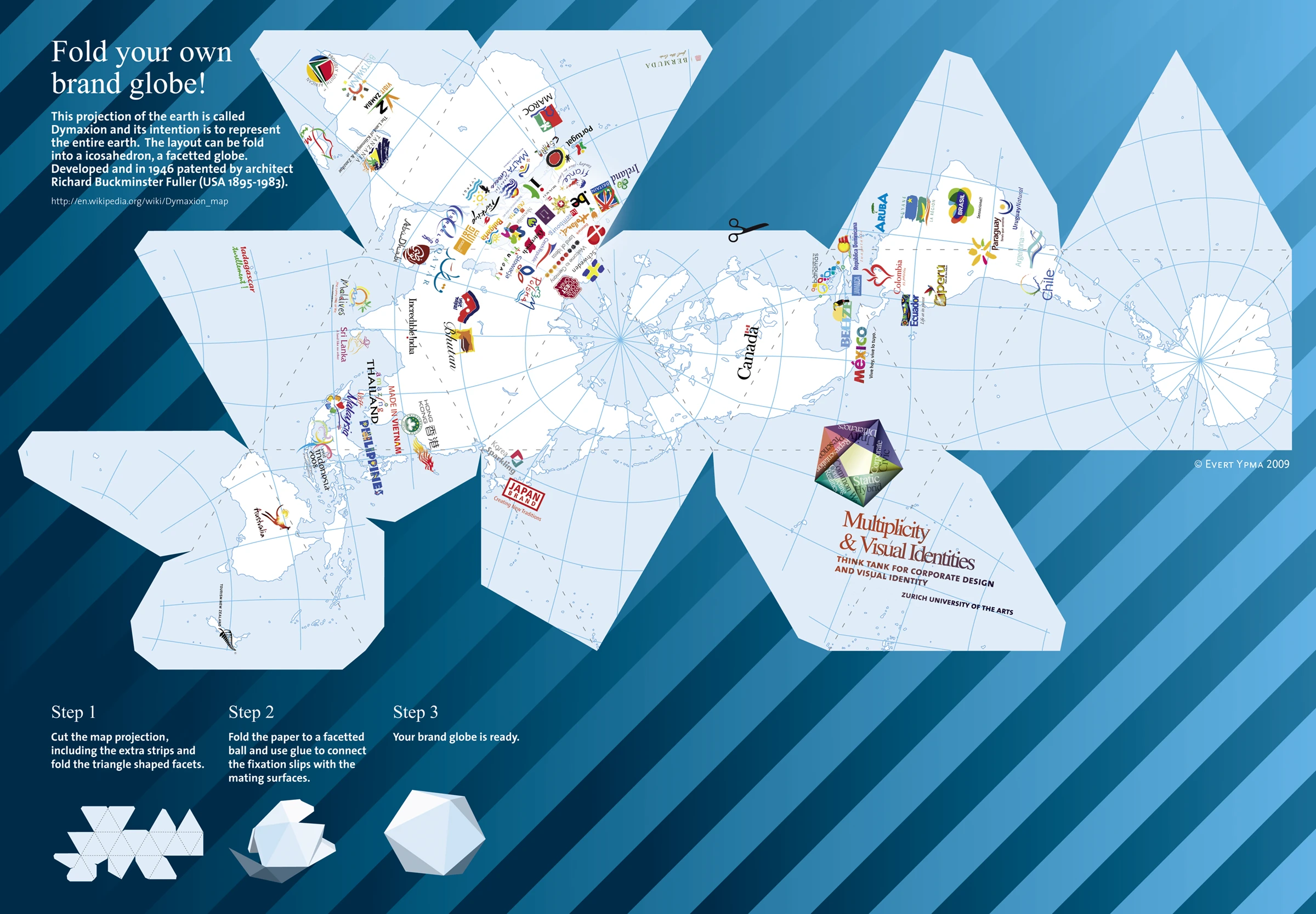
Brand Globe
Evert Ypma, 2014
Exhibition contribution
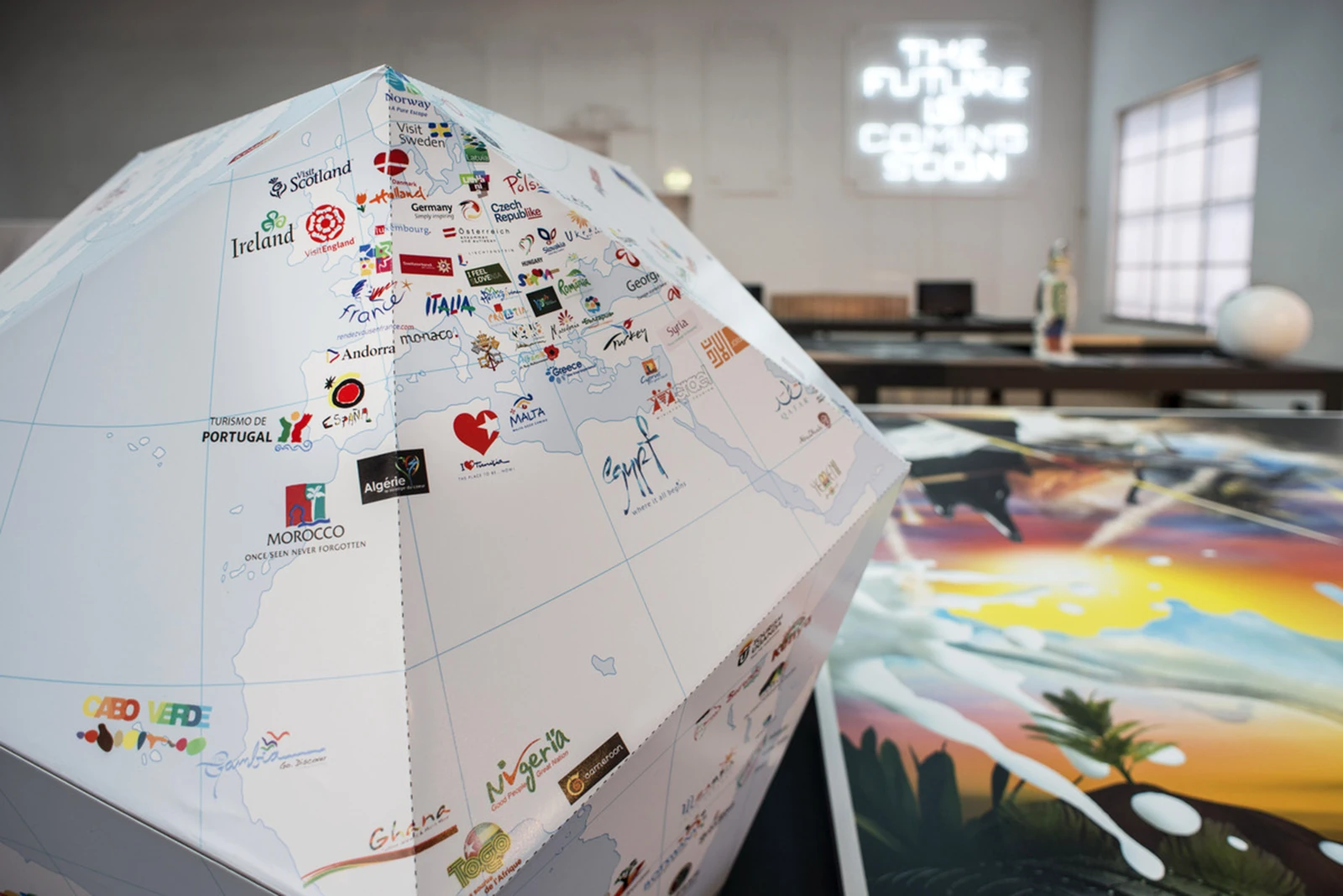
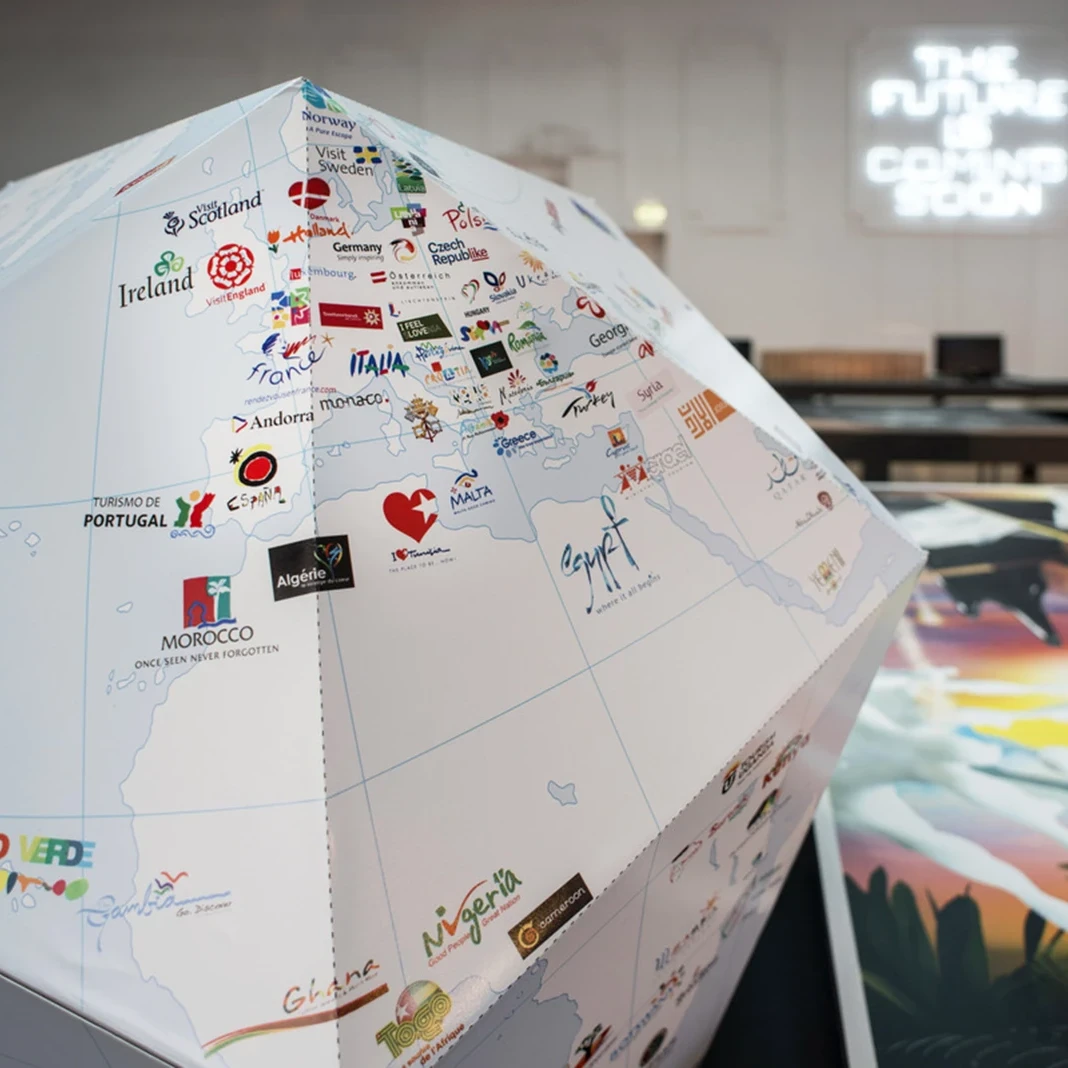
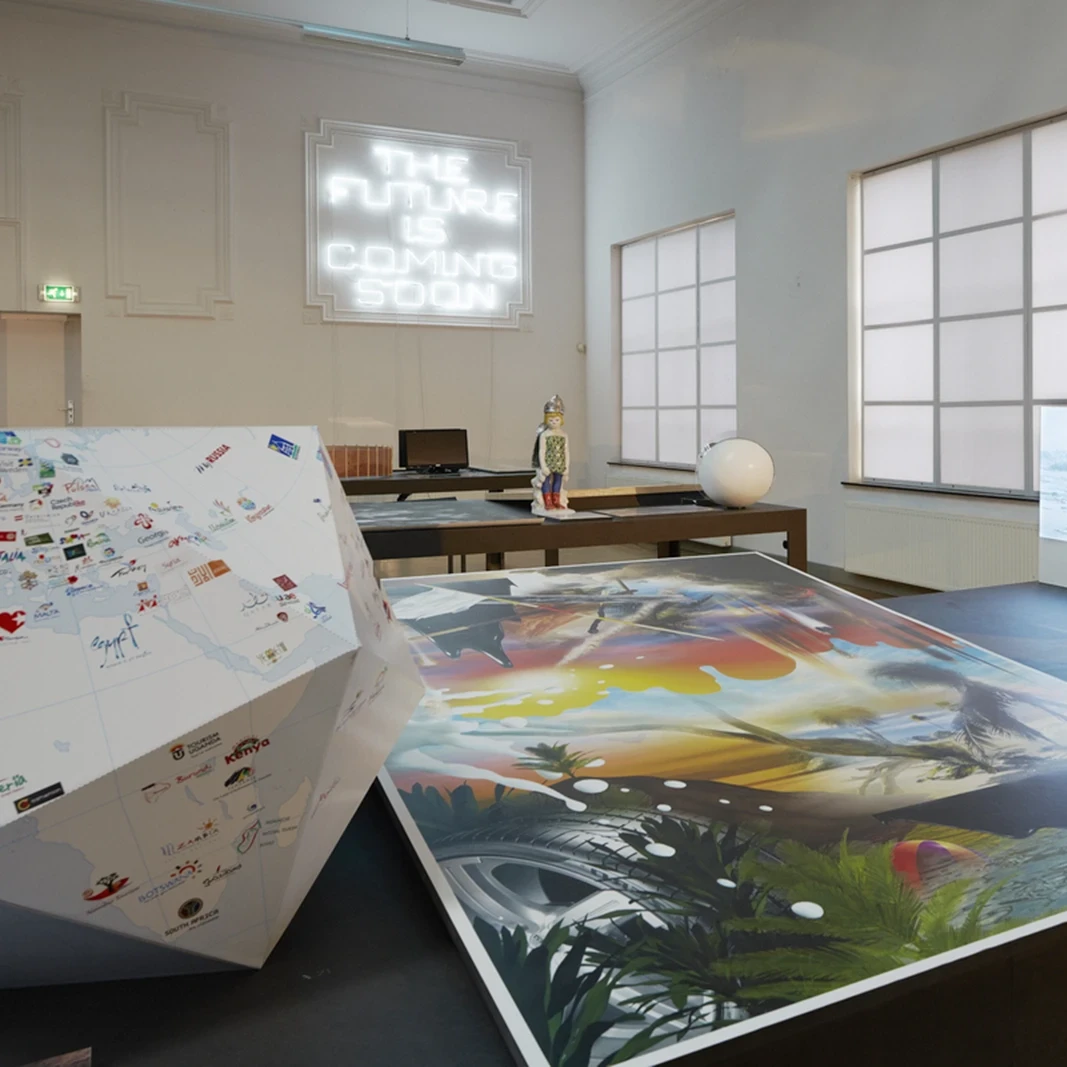
Brand Globe critically examines place branding as a powerful form of collective identification: a visual language through which countries and regions make themselves recognisable within an increasingly interconnected world. Presented on a faceted dymaxion globe, N1 the project brings together a collection of logotypes, symbols and iconographies developed to represent nations and places in the contexts of tourism, export and foreign investment. Its shifting position suggests that national identity is neither fixed nor singular, but continually constructed, circulated and interpreted.
The project formed part of a long-term research programme at the Institute for Design Research at Zurich University of the Arts, investigating identity, representation and the role of design in the production and use of cultural collective symbolism. Brand Globe follows the movement of place branding between commercial practice and public function. Although these identities are often commissioned by public institutions and developed by private design or marketing agencies, they operate as symbolic infrastructures within political, economic and cultural life.
Seen together, the logotypes form a speculative map of globalisation: an archive of aspirations, projections and competing claims to visibility. The globe does not offer a stable image of the world, but a device for observing how places are imagined, standardised and differentiated through communication design. Its uniform visual forms occupy the space between fact and fiction, reflecting the utopian impulse embedded in every act of projection: the desire to make a place legible, comparable, attractive and future-oriented. At the same time, the work leaves open the question of how these identities should be perceived and how they are received. They may be adopted, adapted or rejected by citizens, civil servants, tourists and consumers, revealing the distance between an official image and the lived complexity of a place.
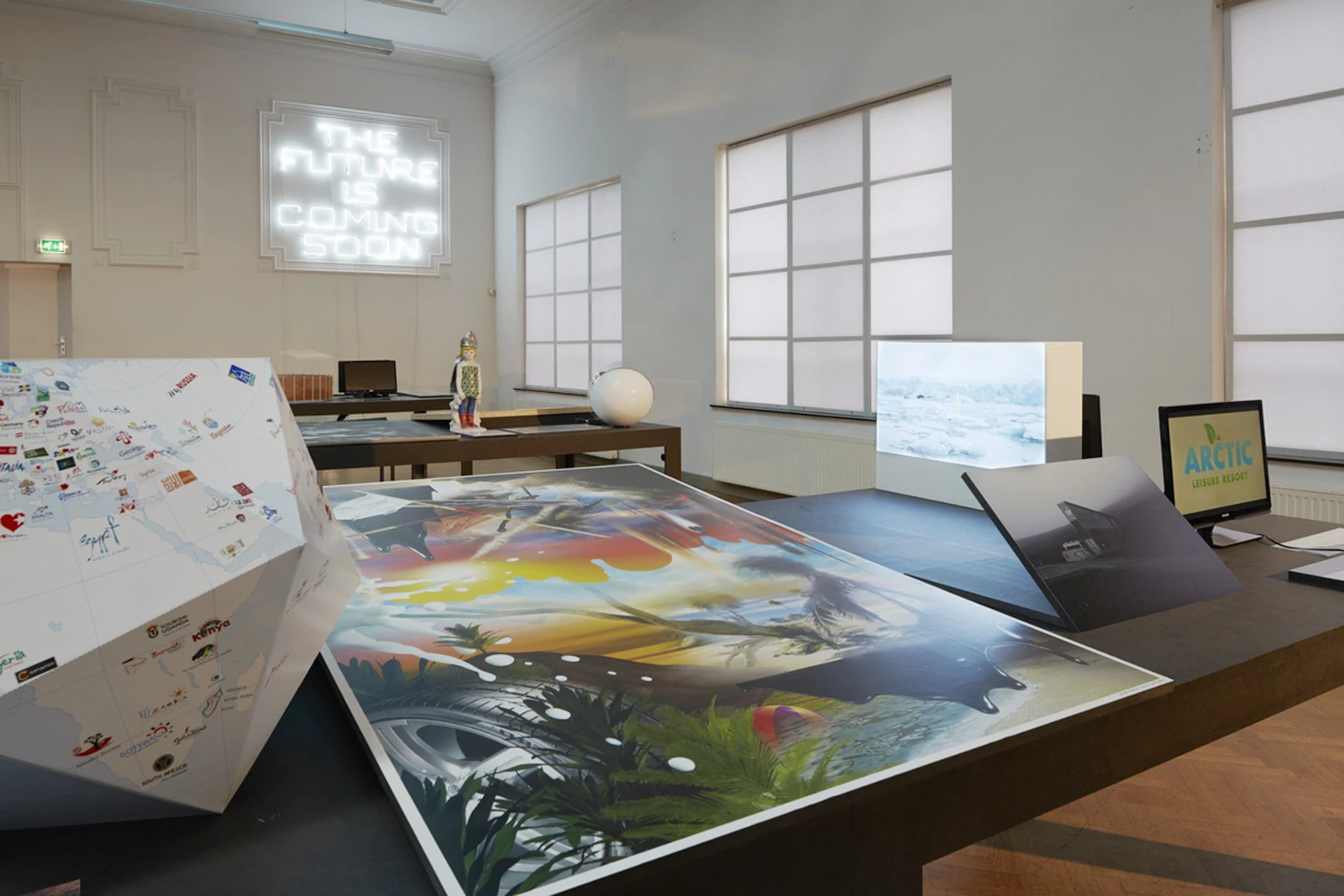
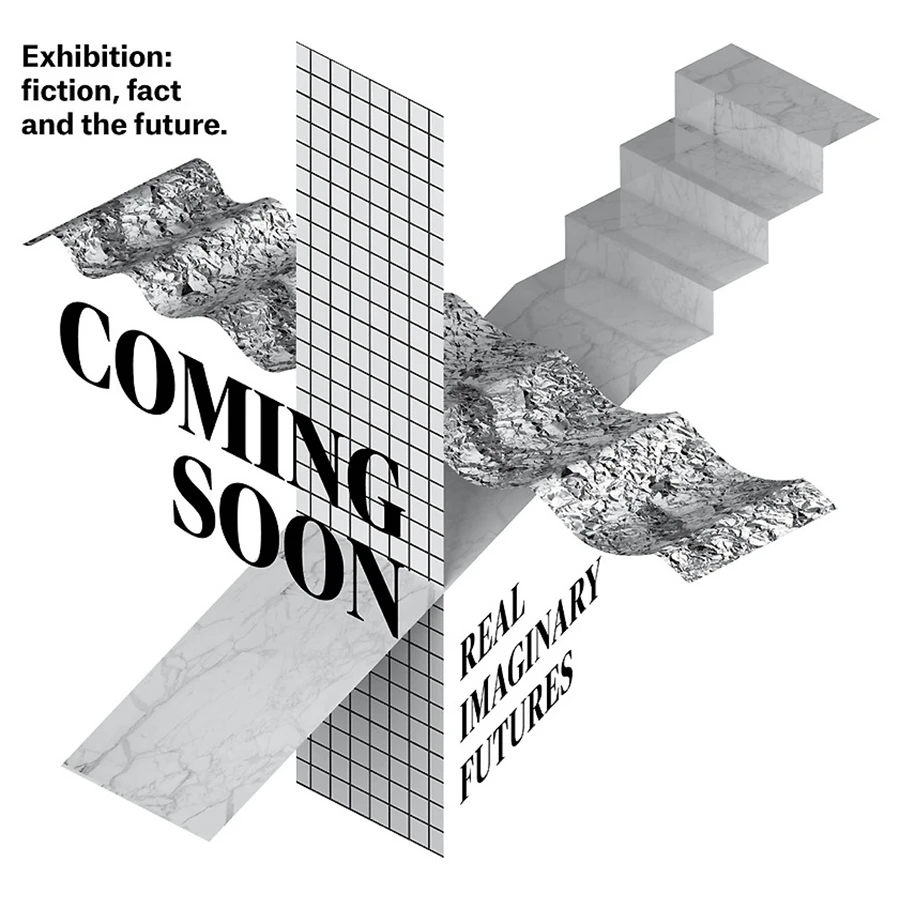
Visual identity COMING SOON: Real Imaginary Futures
Design: Loes Claessens in collaboration with Studio Roosje Klap and The Rodina
Visual identity COMING SOON: Real Imaginary Futures
Design: Loes Claessens in collaboration with Studio Roosje Klap and The Rodina
24 May – 2 August 2014
Bureau Europa, Maastricht
Introduction text to the exhibition:
On May 24 Bureau Europa opens the exhibition COMING SOON. With landscape as a metaphor, the exhibition asks what lies at the heart of our contemporary utopias. From inspiration in the past and urgencies of the present, to projections of possible futures, the needs and virtues of our time (ecology, economy, social cohesion and technology) are extrapolated and implicitly worked into the exhibition and its parallel program.
Expressions of longing for another place, of a dream landscape, the ideal city or an alternatively organised society go far back in time. Some 500 years ago, in his 1516 publication, Utopia, Thomas Moore described a traveller’s quest on his way to a safe haven: an imaginary island isolated from the rest of the world, where one can live in an unusual reality. Such searches for an alternative are one of the prominent features of utopian narratives.
COMING SOON is an exhibition about this desire for an imaginary reality: an eclectic overview of utopian efforts, stories, and practices through the history of mankind. An extensive archive of illustrative examples, particularly from Western cultural and visual history, provides the basis for a genealogy of utopian images and ideas. In addition to this historical overview, a cinematic “Docutopia” is developed. After literature, film is considered to be the medium of choice for imagining other worlds. The spatial works in the exhibition are contemporary projections of the near future, and are more than mere representations of escapist fantasy worlds. They claim the right to exist through other ways of thinking about the structure of the world around us, and kick-starting our imaginations. The selected works are evocative and positioned between fact and fiction. COMING SOON examines the critical potential of this imaginary space (or spaces) between reality and utopian projection. The promise of change, improvement, and imagination lies at the heart of every design and is a crucial part within design disciplines.
With landscape as a metaphor, the exhibition asks what lies at the heart of our contemporary utopias? From inspiration in the past and urgencies of the present, to projections of possible futures, the needs and virtues of our time (ecology, economy, social cohesion and technology) are extrapolated and implicitly worked into the exhibition and its parallel program. It is also recognised that, despite good intentions, most utopias lead to failure. This is possibly a good thing, since it is the utopian impulse – the quest itself – that has the greatest value.
Participants:
Tomás Saraceno, Ruben Pater, Atelier Van Lieshout, Studio Smack, Studio Swine, Alicia Framis, Sandro Setola, Rachel Sussman, Samah Hijawi, MAP Architects, Julijonas Urbonas, Studio Makkink & Bey, Enzo Mari, Imme van der Haak, Theo Jansen, Arne Hendriks, DUS Architects, TD Architects, Kyra van Ineveld, N55, Anthony Lau, Nelly Ben Hayoun, WHIM Architecten, Emre Hüner, The Why Factory, Bitcaves, Dingeman Deijs, Martina Petrelli, R&Sie(n), Urban-Think Tank, El-Ab Architects, Maarten Vanden Eynde, David Benqué, Mathias Schweizer, HY Architects, OFL Architects, Ben Landau, Bas van Beek, Bureau d’Etudes, Arjen de Leeuw, Rob Voerman, Fairphone, Point Supreme Architects, MVRDV, Constant Dullaart, Persijn Broersen & Margit Lukács, Femke Herregraven, Metahaven, Jonas Staal, Dirk Vander Kooij, STEALTH. unlimited i.c.w. Kristian Lukić & Emil Jurcan, CLOUDS Architecture, Guy Ben Ner, Markus Kayser, Space Caviar, The Lowline, Evert Ypma, Elegant Embellishments, Pieter Stoutjesdijk, Dogma, PAL-V Europe & Spark, Fredrik Härén, Owen Wells, Advanced Tactics, Pierre Bismuth, Studio Orta, Helmut Smits, Life Straw, Anne Holtrop, the Why Factory, Marta Volkova & Slava Shevelenko, One Architecture, Magnus Larsson, The Seasteading Institute, Stewart Brand.
Source: Bureau Europa

- Institution
Bureau Europa
- Project type
Design research, Exhibition
- Field
Visual culture, Representation, Place branding
- Location
Maastricht
- Year
2014
- Status
Completed